Karlín gets often described as Prague’s coolest neighbourhood. A place that feels like the real Prague rather than a postcard of it. All of that is broadly true, but none of it tells you what it actually feels like to wake up in a Karlín apartment in Prague on a Tuesday morning and figure out your day. This guide does.
The first thing you notice is how quiet it is
Coming from the Old Town or, for that matter, from most European city centres, the quiet in Karlín is the first thing that registers. It is a quiet just ordinarily urban in the way that neighbourhoods where people actually live tend to be. Mornings have the sound of trams, coffee shops opening, the occasional delivery van. Nothing like the recorded tour guide commentary that drifts through Old Town windows by eight in the morning.
The neighbourhood runs on a rhythm that follows working hours. It fills up at lunchtime, quiets in the afternoon, comes alive again in the early evening when the restaurants and wine bars fill with people who walked from their offices rather than from their hotels. Weekends are slower but never dead. There is always somewhere open and always someone at a terrace table with a coffee or a glass of something local.
The architecture will stop you mid-stride
Karlín was largely rebuilt after the devastating 2002 floods, and the reconstruction was handled with unusual care. The neighbourhood’s nineteenth-century bones were preserved and restored. Wide boulevards lined with ornate apartment buildings. High ceilings, large windows, decorative facades in shades of ochre and cream. Courtyards hidden behind street-level archways.
These buildings were not preserved to create a tourist attraction, but because people live in them and because the city understood their value. Walking through Karlín feels like discovering something rather than being shown something, and that distinction matters more than it sounds.
The neighbourhood also has pockets of deliberate modernity. Converted industrial buildings now house restaurants, co-working spaces and design studios. The contrast between the old residential streets and the repurposed warehouses along the edges of the neighbourhood gives Karlín a texture that feels genuinely layered.
Getting your bearings takes about half a day
Karlín is compact enough to understand quickly. The main commercial street, Sokolovská, runs along the northern edge and carries trams and buses connecting to the rest of the city. Křižíkova is where most of the cafés and casual restaurants cluster. Karlínské náměstí, the central square, is the neighbourhood’s natural gathering point and the best place to orient yourself when you arrive.
The metro station Florenc sits on the western edge of the neighbourhood and connects directly to Line B, which gets you to Náměstí Republiky in two stops and to the main train station in three. Line C is also accessible at Florenc, adding direct connections to the airport bus terminal and to Vinohrady. In practical terms, nowhere in Prague takes more than 30-40 minutes from Karlín by public transport, and the city’s tram network fills in every gap the metro leaves.
Walking into the Old Town takes around twenty to thirty minutes depending on your starting point within the neighbourhood. The route along the river is longer but worth doing at least once. Most people find they use the metro for efficiency and walk for pleasure, and Karlín gives you good reasons to do both.
The food scene is not a secret anymore, but it still delivers
Karlín’s restaurant scene developed quickly and the quality held. The neighbourhood attracted chefs who wanted serious local clientele, and that created something sustainable. The restaurants here change their menus, take reservations seriously and stay open because the neighbourhood keeps coming back.
Eska is the most written-about restaurant in the area and the attention is deserved. It occupies a former industrial bakery, serves a menu built around fermentation, Czech produce and serious technique, and operates a bakery counter from early morning. Reservations are advisable for dinner. For Vietnamese food, Pho Vietnam Tuan & Lan on Slavíkova has been a neighbourhood institution for years and the queues at lunchtime tell you everything you need to know.
The coffee culture is strong. The cafés along Křižíkova and around Karlínské náměstí operate at the level you would expect in any serious European coffee city. Most are good for working in through the morning and transition naturally into wine bars or aperitivo spots by late afternoon. Several bottle shops with attached seating have opened in recent years, stocking Czech natural wines and local craft beer alongside more international selections.
Grocery shopping is straightforward. There is a Billa supermarket near Florenc and several smaller shops scattered through the neighbourhood for daily needs. The farmers market at Náměstí Míru in neighbouring Vinohrady runs on Wednesdays and Saturdays and is worth the ten-minute tram ride.
What the apartments are actually like
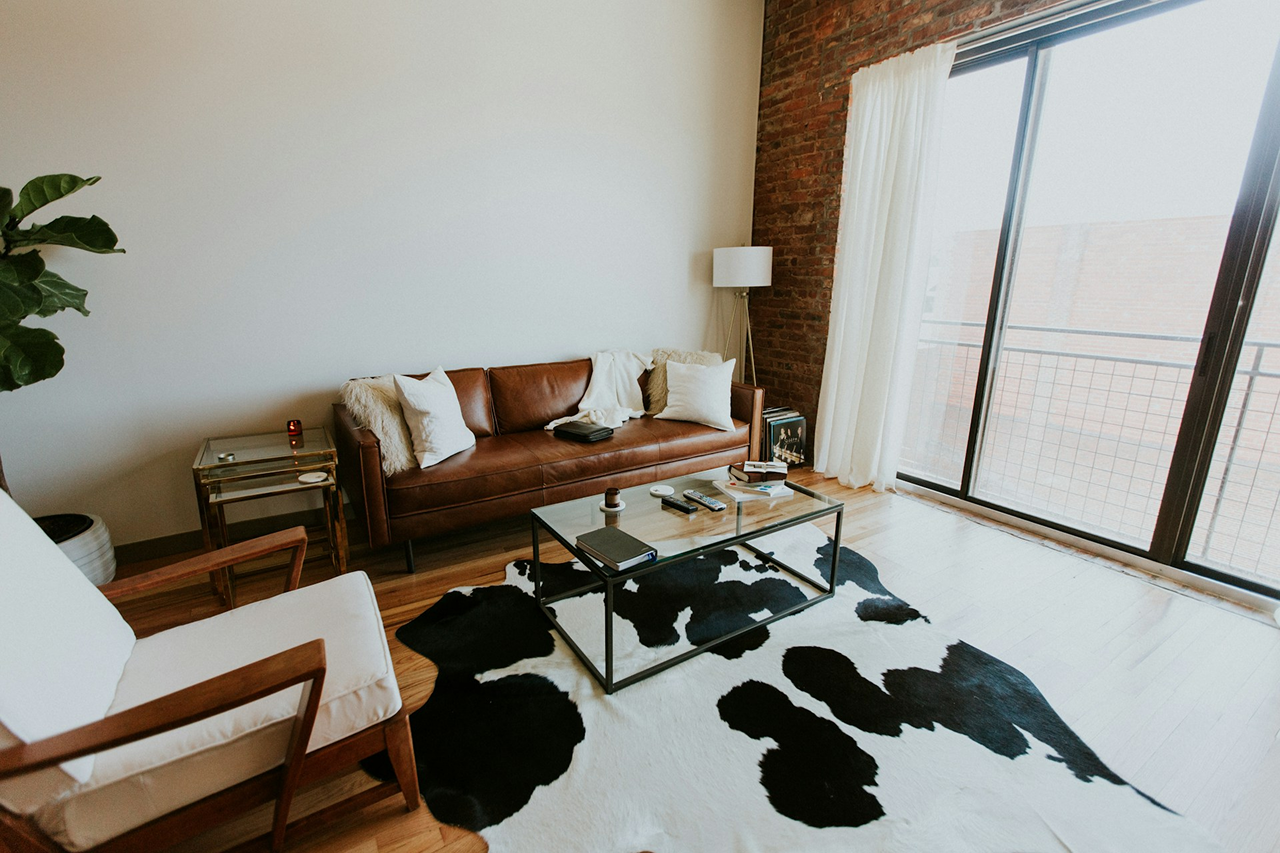
Karlín’s residential buildings are predominantly nineteenth-century construction with high ceilings, solid walls and large windows. Apartments in the neighbourhood tend to have more character and more space than equivalents in newer developments elsewhere in the city. The buildings have been renovated to modern standards in most cases, which means the charm of the architecture without the problems of aging infrastructure.
Street-facing apartments on lower floors can pick up some traffic noise from the main roads, but the side streets and courtyard-facing units are quiet enough at night to leave windows open in summer without being disturbed. The neighbourhood is entirely residential in character once you move away from the main commercial strips, so late-night noise from bars and restaurants is minimal compared to the Old Town or Žižkov.
Is Karlín safe?
The question comes up and the answer is straightforwardly yes. Karlín has no meaningful safety concerns for visitors. It is a residential neighbourhood with a professional demographic and low urban friction. Normal city awareness applies. Beyond that, there is nothing specific to worry about.
The neighbourhood is well-lit, well-maintained and busy enough in the evenings to feel active without feeling intimidating. Walking home late from a restaurant or wine bar is entirely unremarkable.
The honest part of the honest guide
Karlín is not perfect and it is worth saying so. The neighbourhood has gentrified quickly and the process is not finished. Some of that brings better restaurants and renovated buildings. Some of it brings the particular sterility of areas being optimised for affluent newcomers. The balance is still good, but Karlín in 2026 is not the slightly rough-edged discovery it was ten years ago.
For visitors, this is almost entirely positive. The neighbourhood is easier to navigate, better served by good food and coffee, and more polished than it used to be. The character remains intact. The question of whether it stays that way belongs to the people who live there, not to people passing through for a week.
A neighbourhood that stays with you
Most places you visit on a trip blur into a general impression of the city. Karlín tends not to do that. The combination of a specific visual character, food scene, and the feeling of being somewhere that functions independently of tourism adds up to something that lodges in memory more precisely than a hotel room in a historic centre. People who stay in Karlín come back to Karlín. That is probably the most honest thing this guide can tell you.

- What Does the Complete SEO Toolkit TopRankerTools Reveal About Your Website and How to Act on It? - 30.04.2026
- How to Run Your First SEO Analysis Tool Audit Without Technical Knowledge - 30.04.2026
- What to Expect When Staying in a Karlín Apartment in Prague – An Honest Neighbourhood Guide - 22.04.2026